

Latest
Speech
23 December 2025
Protection of Children in the Digital Environment Modern Tools and International Cooperation
Learn more
Speech
18 December 2025
Promoting Inclusive Language in Media
Learn more
Press Release
18 December 2025
Seminar Held on “Promoting Inclusive Language in Media”
Learn more
Latest
The Sustainable Development Goals in Azerbaijan
Over the last eight years, Azerbaijan has demonstrated its firm commitment towards achieving the 2030 Agenda. The President of the Republic of Azerbaijan issued the Decree in 2016, to establish the National Coordination Council for Sustainable Development - a key partner for the United Nations to channel its support to the Government of Azerbaijan since then.
Azerbaijan has been one of the first countries to undertake a MAPS mission (Mainstreaming, Acceleration and Policy Support for the 2030 Agenda) which outlined concrete policy and programming steps that could be taken to accelerate the goals nationally, the experience which was presented at the 2018 Baku Forum on Sustainable Development. This regional event also marked the adoption of the Baku Principles which established provisions for the integration of SDGs and acceleration of their implementation.
With UN support, the National Information Portal on SDGs was launched, which introduces an interactive dashboard, collects consolidated data, tracks and monitors progress towards the SDGs in real-time. UN provides continuous support to strengthen national statistical capacities to produce quality data while focusing on disaggregation to Leave No One Behind.
United Nations also makes special efforts to engage different groups including the private sector, media, parliamentarians, and the public, among others, in promoting the Goals.
Publication
18 June 2025
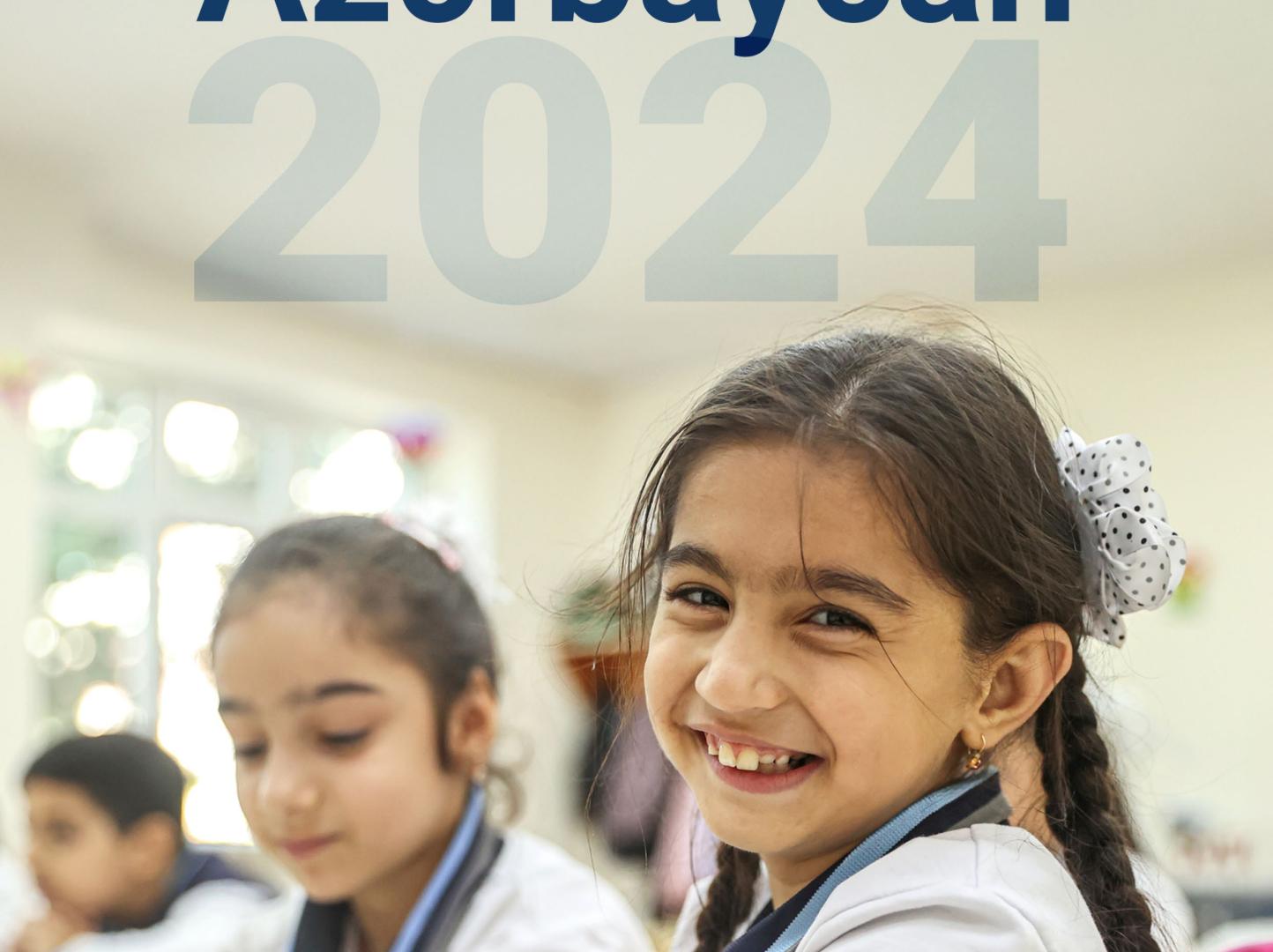
Azerbaijan Annual Results Report 2024
In 2024, the United Nations in Azerbaijan, in close collaboration with the Government, development partners, and civil society, continued its efforts to support inclusive, sustainable, and resilient development across the country. Guided by the United Nations Sustainable Development Cooperation Framework (UNSDCF) 2021–2025, our work focused on strengthening institutions, empowering communities, and ensuring no one is left behind.
1 of 5

Publication
23 December 2025
UNSDCF 2026-2030
Sustainable Development Cooperation Framework Between the United Nations and the Government of the Republic of Azerbaijan 2026–2030 marks a new phase in the partnership aimed at accelerating the progress toward the Sustainable Development Goals. The Cooperation Framework serves as a strategic platform to address Azerbaijan’s priorities as an upper-middle-income country, offering tailored support to advance its sustainable development pathway across two strategic priority areas: advancing inclusive socio-economic growth and human development and promoting ecosystems and climate resilience, green growth, and just transition. Through these priorities, the United Nations will utilisecoordinated, evidence-based, and results-oriented approaches aligned with national development strategies and the principle of “Leaving No One Behind.”
1 of 5

Press Release
31 October 2024
UN Azerbaijan Celebrates UN Day with the 5th SDG Dialogue: “Future Echoes: Bridging Paths for Climate Action and Global Goals”
The event brought together representatives from the Government, UN Azerbaijan, civil society, private sector, development partners and the diplomatic community to explore Azerbaijan’s path to a sustainable and climate-resilient future. Ahead of the 29th UN Climate Change Conference in Baku in November, the Dialogue focused on scaling up climate finance to enable the successful implementation of Azerbaijan’s national climate action plan and advancing Sustainable Development Goals (SDGs).Part of the UN’s ongoing SDG Dialogue series that was launched in 2022, the event provided a platform for high-level dialogue and knowledge exchange on opportunities to maximize the development co-benefits of climate finance. Deputy Minister of Foreign Affairs and Chief Negotiator for COP29, Yalchin Rafiyev, spoke about Azerbaijan's multilateral relations with international organizations, including the UN, and the importance of the UN's multifaceted global mission. Ms. Vladanka Andreeva, UN Resident Coordinator in Azerbaijan, highlighted the critical importance of multilateralism and partnerships to tackle global challenges: “With the window of opportunity quickly closing to reach net-zero by 2050 and keep warming under 1.5°C, the upcoming COP29 will be a pivotal moment for the climate agenda and the 2030 Agenda for Sustainable Development. Together with all partners, and in support of the Government, we will scale-up our support for Azerbaijan’s climate ambition.”Deputy Minister of Economy Samad Bashirli emphasized that effective measures are being taken in Azerbaijan to address climate change and its negative impacts, with purposeful actions being implemented toward a green transition. It was noted that hosting COP29, a prestigious UN event, entrusted to our country, is another indication of international trust in Azerbaijan and opens a new chapter in our cooperation with the UN. Today's event will also contribute to discussions within the framework of COP29.The two keynote presentations outlined Azerbaijan’s climate ambition as articulated in the new Nationally Determined Contributions (NDC 3.0) and the Long-Term Climate Strategy. The first was delivered by Mr. Elnur Soltanov, Deputy Minister of Energy and COP29 Chief Executive Officer, titled “Main Features of Azerbaijan’s Nationally Determined Contributions and Development Co-Benefits of the Long-Term Climate Strategy”; and the second was delivered by Mr. Vugar Karimov, Deputy Minister of Ecology and Natural Resources, titled “Azerbaijan’s long term climate strategy on combatting climate change.” Following this, a high-level panel, “Scaling up Climate Action in Azerbaijan,” delved into the pathways and partnerships needed to deliver Azerbaijan’s national climate action plan and achieve sustainable development.As the final countdown to COP29 starts, this SDG Dialogue reinforced Azerbaijan’s strong commitment to both climate action and sustainable development. Discussions with stakeholders highlighted the importance of scalable financing solutions and collaborative engagement across sectors. Key recommendations from the Dialogue will inform the implementation of Azerbaijan’s national climate action plan.
1 of 5
Publication
14 October 2025
SDG Dialogues - brochure
Through open and inclusive discussions, the SDG Dialogues serve as a national platform to exchange ideas, share good practices, and identify collective actions to advance sustainable development in Azerbaijan.The dialogues highlight key priorities, from climate action and gender equality to innovation and social inclusion, emphasizing that achieving the SDGs requires the engagement of all.Each dialogue contributes to shaping national pathways toward a more just, green, and resilient future for everyone.
1 of 5

Video
25 November 2025
End Digital Violence! | Joint Message of Vladanka Andreeva and Bahar Muradova
On November 25, the State Committee for Family, Women and Children Affairs and the UN Resident Coordinator Office launched the 16 Days of Activism against Gender-Based Violence with a joint video message under this year’s theme: UNiTE to End Digital Violence against All Women and Girls.
Chairwoman Bahar Muradova and UN Resident Coordinator Vladanka Andreeva call for collective action to make digital spaces safe, inclusive and free from abuse.
Their message is clear: everyone has the right to feel protected — online and offline.
#NoExcuse #ACTtoEndViolence #16Days #UNinAzerbaijan
Chairwoman Bahar Muradova and UN Resident Coordinator Vladanka Andreeva call for collective action to make digital spaces safe, inclusive and free from abuse.
Their message is clear: everyone has the right to feel protected — online and offline.
#NoExcuse #ACTtoEndViolence #16Days #UNinAzerbaijan
1 of 5

Story
28 July 2025
Azerbaijan Annual Results Report 2024
From inclusive climate action to mine clearance, education, and social services, 2024 marked a transformative journey towards the SDGs. Discover how the United Nations in Azerbaijan, in partnership with the government and partners, helped build a more resilient, sustainable future. bit.ly/UNAz
1 of 5

Story
28 November 2024
COP29 and UN Azerbaijan: a Joint Commitment to Climate Action
In November 2024, Azerbaijan hosted COP29, convening global leaders and negotiators to advance climate action.
Beyond formal negotiations, COP29 featured side events and dialogues, fostering collaboration and strengthening partnerships for inclusive and sustainable
solutions.
• Following the COP29 presidency’s request for coordinated UN support, the Global UN COP29 Task Force was activated by the Deputy Secretary-General
and co-chaired by the Special Adviser to the Secretary-General on Climate Action and Just Transition and the UN Resident Coordinator in Azerbaijan. Consisting of around 25 UN entities, the Task Force provided substantive support for 12 (out of 14) Presidency Initiatives launched during COP29. The Task Force has been hailed as a good practice of inter-agency collaboration in support of host governments of large-scale international conferences.
• As an integral part of the UN Azerbaijan COP29 Engagement Strategy, the UN organized the climate conversations series 29 Climate Conversations on
the Road to COP29 in Baku and some regions, in partnership with the COP29 presidency, the government, the private sector, civil society, young people, development partners, academia, the media and others, to raise awareness of climate change and mobilize climate action across the country. Addressing topics such as digital innovation, just transition, reproductive health, and green finance, the series brought together government representatives, international organizations, civil society, and private sector leaders to drive actionable solutions.
• Designed to inspire meaningful discussions and solutions, the UN Azerbaijan Pavilion at COP29 hosted around 25 events to explore the effects of climate change on women, children, refugees, migrants, and other vulnerable groups. Distinguished speakers engaged with participants, particularly youth, in insightful discussions on climate leadership.
• A key feature of the pavilion was the Four Climate Dialogues, a series of high-level interviews with experts and leaders on critical climate issues. These discussions provided insights into sustainable development strategies and actionable resilience measures for Azerbaijan and beyond. In addition, the Climate Impact and World Children’s Day photo exhibitions were held.
• At COP29, Azerbaijan launched several key initiatives with UN support to advance climate action and sustainable development, including the Baku
The Harmony Climate Initiative for Farmers aims to strengthen climate change adaptation in agriculture, food systems, and water management. Multisectoral
Action Pathways (MAP) to Resilient and Healthy Cities, endorsed by 45 governments, provides a framework for integrating climate resilience, public
health, and urban sustainability into national policies. The launch of the National Strategy for 2025–2030 on the Prevention and Control of Zoonotic Diseases reaffirmed Azerbaijan’s commitment to global health security and climate resilience. In parallel, the Environmental Performance Review was presented, engaging
stakeholders in aligning environmental and economic goals, and assessing compliance with international environmental commitments.
• Azerbaijan has also signed the Declaration on Children, Youth and Climate Action, committing to put children at the centre of climate policy. The Government also joined the Global Children’s Environmental Health Collaborative, making the country the ninth globally to join the initiative, established to prioritize children’s environmental health needs in local and international platforms.
Beyond formal negotiations, COP29 featured side events and dialogues, fostering collaboration and strengthening partnerships for inclusive and sustainable
solutions.
• Following the COP29 presidency’s request for coordinated UN support, the Global UN COP29 Task Force was activated by the Deputy Secretary-General
and co-chaired by the Special Adviser to the Secretary-General on Climate Action and Just Transition and the UN Resident Coordinator in Azerbaijan. Consisting of around 25 UN entities, the Task Force provided substantive support for 12 (out of 14) Presidency Initiatives launched during COP29. The Task Force has been hailed as a good practice of inter-agency collaboration in support of host governments of large-scale international conferences.
• As an integral part of the UN Azerbaijan COP29 Engagement Strategy, the UN organized the climate conversations series 29 Climate Conversations on
the Road to COP29 in Baku and some regions, in partnership with the COP29 presidency, the government, the private sector, civil society, young people, development partners, academia, the media and others, to raise awareness of climate change and mobilize climate action across the country. Addressing topics such as digital innovation, just transition, reproductive health, and green finance, the series brought together government representatives, international organizations, civil society, and private sector leaders to drive actionable solutions.
• Designed to inspire meaningful discussions and solutions, the UN Azerbaijan Pavilion at COP29 hosted around 25 events to explore the effects of climate change on women, children, refugees, migrants, and other vulnerable groups. Distinguished speakers engaged with participants, particularly youth, in insightful discussions on climate leadership.
• A key feature of the pavilion was the Four Climate Dialogues, a series of high-level interviews with experts and leaders on critical climate issues. These discussions provided insights into sustainable development strategies and actionable resilience measures for Azerbaijan and beyond. In addition, the Climate Impact and World Children’s Day photo exhibitions were held.
• At COP29, Azerbaijan launched several key initiatives with UN support to advance climate action and sustainable development, including the Baku
The Harmony Climate Initiative for Farmers aims to strengthen climate change adaptation in agriculture, food systems, and water management. Multisectoral
Action Pathways (MAP) to Resilient and Healthy Cities, endorsed by 45 governments, provides a framework for integrating climate resilience, public
health, and urban sustainability into national policies. The launch of the National Strategy for 2025–2030 on the Prevention and Control of Zoonotic Diseases reaffirmed Azerbaijan’s commitment to global health security and climate resilience. In parallel, the Environmental Performance Review was presented, engaging
stakeholders in aligning environmental and economic goals, and assessing compliance with international environmental commitments.
• Azerbaijan has also signed the Declaration on Children, Youth and Climate Action, committing to put children at the centre of climate policy. The Government also joined the Global Children’s Environmental Health Collaborative, making the country the ninth globally to join the initiative, established to prioritize children’s environmental health needs in local and international platforms.
1 of 5

Story
27 August 2024
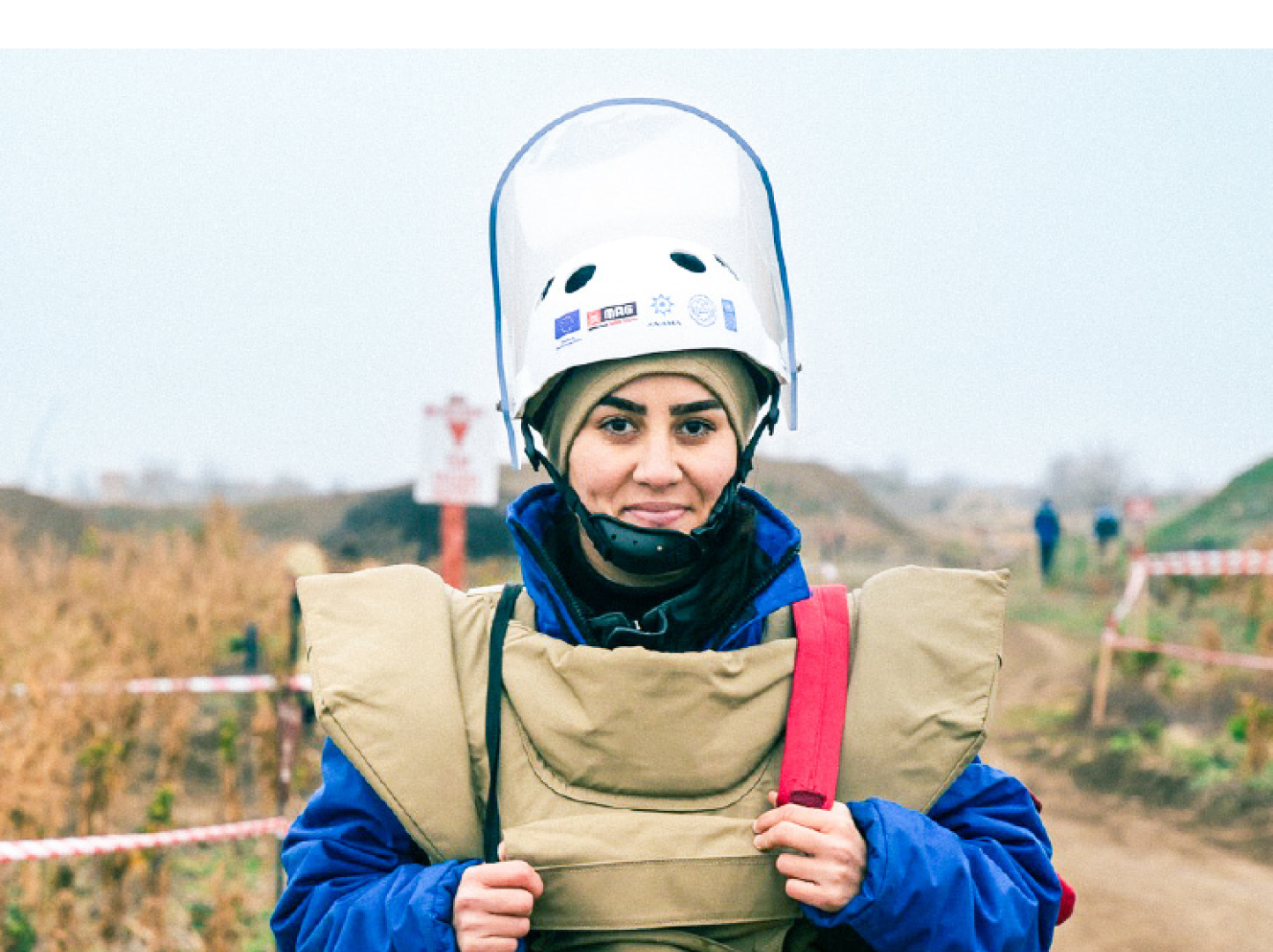
When a woman deminer talks…
“Certain events caused my husband and me part our ways. prompting me to move with children to my mother's place. Right now, it is just me and my five-year-old daughter, Nilufar, living together. She is at her preschool studies, while my fourteen-year-old son, Mammad, is away at high school. We are currently staying in an IDP settlement. We hope that once the land is safe again after the mines are cleared, we can return to our homeland.”Narmin is a deminer, dedicating her days to the crucial task of clearing our precious earth from mine contamination. She needed a job, so when she came across an online job opening for recruitment of women deminers she felt compelled to apply. Despite knowing it is a tough job, Narmin believed she could handle it. While the decision to apply was not hard for Narmin, her mother worried about the choice. “After submitting my application and passing the exam, I felt relieved and grateful to be chosen for the position. Joining this project has made me feel like I am part of something truly meaningful. Luckily, I was the first among our group of women deminers to discover a mine. It filled me with an immense sense of pride and shifted the way people treated me, and those around me started to express their pride in my achievement though initially, my decision to pursue this challenging profession was not welcomed by my mother and relatives.”Their primary goal is to locate landmines and other dangerous items buried beneath the ground and then safely hand them over to the explosive ordnance disposal team. As a team of women deminers, they are deeply involved in the effort to clear areas contaminated by mines, actively contributing to this vital work. “This is my first job, a significant milestone for me. Getting my very first paycheck as a deminer, helped finding a way to support my family's needs. It's been a year now since I joined the project, and over this time, I have seen how my earnings have made a real difference. With careful saving and hard work, I was able to buy a car. It made our daily routines smoother, lightening the load of family responsibilities and giving us a newfound sense of ease and freedom.”Narmin is a mother. She came on a call of her motherland. She came to release it from foreign objects, to restore its purity, and to help it flourish again!
1 of 5

Story
31 May 2024
Azerbaijan and Lao PDR: ‘Twins’ in pursuit of the SDGs
This is true for the UN development system that is working to support progress towards the 2030 Agenda, and it is true for the Member States that designed and signed up to it. And when we are falling so far behind, with Asia-Pacific collectively heading for a 32-year delay according to the latest estimates from ESCAP, that search for ideas needs to go beyond the most obvious places.Amongst the many efforts to analyze sustainable development progress, bottlenecks, and their solutions, perhaps the most extensive at the country level are the Voluntary National Reviews that countries can opt to develop and present to the High-Level Political Forum annually. These extensive, and collective, exercises speak to the universality of the SDGs and take a deep look at how close we are to reaching our 2030 targets, and shape ideas and policies that can help us to get there faster.
This year, Azerbaijan and Lao PDR are both undertaking such reviews.At first glance, Azerbaijan, an upper-middle income country in the South Caucasus, would seem to have little in common with Lao PDR, a country working towards graduation from Least Developed Country status in the heart of tropical Southeast Asia.But look closer, and many more areas of common interest begin to emerge.
Both have strong track records of commitment to the SDGs- Azerbaijan is preparing its fourth Voluntary National Review and Lao PDR its third. Both have worked hard to integrate the SDGs into national frameworks and policies. And both have encountered major obstacles to their pursuit of sustainable development for all. Perhaps most prominently, both have developed a bespoke SDG18. For Lao PDR, SDG18 aspires to ‘Lives safe from unexploded ordnance’. For Azerbaijan, SDG18 covers ‘Actions to combat mine threats’. In both cases, removing the threats from landmines and explosive remnants of war is considered essential for progress across the SDGs, despite this not being a clear element of the global 2030 Agenda.
It is precisely the combination of these similarities and differences that set the context for a successful ‘twinning’ exchange between the two countries organized under a flagship ESCAP initiative to support Voluntary National Review processes. Arranged by ESCAP with support from UN Resident Coordinator’s Offices, UNDP, and UNICEF, the series of virtual and in-person exchanges between the two countries shared concrete ideas and experiences on how the SDGs can be pursued in a broad range of areas.
This included sharing pragmatic experiences on how SDG policies and indicators can be prioritized, which is particularly valuable in the context of ongoing work to develop the next cycle of the National Social Economic Development Plan for Lao PDR. The ‘twins’ were able to compare notes on how national institutions and structures can be organized to integrate and promote the achievement of the SDGs, such as through the establishment of national committees, and clearly linking policy discussions to financial resources.And lessons were shared on how different groups of stakeholders can be effectively and substantively engaged in national processes for the delivery of the 2030 Agenda- in particular how young people and volunteers can be engaged as a demographic that is so critical to the future development prospects of both countries.
This is already leading to new and promising areas of partnership. At the High-Level Political Forum in New York in July, a joint side event will be organized focused on the respective SDG 18s, working together to raise the profile of this critical development challenge for achievement across the SDGs for both countries.Discussions have also started on possible collaboration on issues related to climate change, and in particular climate finance in the lead up to Azerbaijan’s hosting of COP29 later this year.Exchanges are continuing on how Azerbaijan’s successful experiences in the digital delivery of public services could be shared with counterparts in Lao PDR as it embarks on its Digital Government Masterplan.And building on this success, plans are afoot to continue the exchange, next time in Vientiane.We are collectively badly off-track from our vision for 2030, and in urgent need of actions to change the trajectory. But, as the experiences of Azerbaijan and Lao PDR show, precisely because that vision is so universal, there is a world of ideas and inspiration out there that countries can draw on. It’s our job to help build that bridge.
This year, Azerbaijan and Lao PDR are both undertaking such reviews.At first glance, Azerbaijan, an upper-middle income country in the South Caucasus, would seem to have little in common with Lao PDR, a country working towards graduation from Least Developed Country status in the heart of tropical Southeast Asia.But look closer, and many more areas of common interest begin to emerge.
Both have strong track records of commitment to the SDGs- Azerbaijan is preparing its fourth Voluntary National Review and Lao PDR its third. Both have worked hard to integrate the SDGs into national frameworks and policies. And both have encountered major obstacles to their pursuit of sustainable development for all. Perhaps most prominently, both have developed a bespoke SDG18. For Lao PDR, SDG18 aspires to ‘Lives safe from unexploded ordnance’. For Azerbaijan, SDG18 covers ‘Actions to combat mine threats’. In both cases, removing the threats from landmines and explosive remnants of war is considered essential for progress across the SDGs, despite this not being a clear element of the global 2030 Agenda.
It is precisely the combination of these similarities and differences that set the context for a successful ‘twinning’ exchange between the two countries organized under a flagship ESCAP initiative to support Voluntary National Review processes. Arranged by ESCAP with support from UN Resident Coordinator’s Offices, UNDP, and UNICEF, the series of virtual and in-person exchanges between the two countries shared concrete ideas and experiences on how the SDGs can be pursued in a broad range of areas.
This included sharing pragmatic experiences on how SDG policies and indicators can be prioritized, which is particularly valuable in the context of ongoing work to develop the next cycle of the National Social Economic Development Plan for Lao PDR. The ‘twins’ were able to compare notes on how national institutions and structures can be organized to integrate and promote the achievement of the SDGs, such as through the establishment of national committees, and clearly linking policy discussions to financial resources.And lessons were shared on how different groups of stakeholders can be effectively and substantively engaged in national processes for the delivery of the 2030 Agenda- in particular how young people and volunteers can be engaged as a demographic that is so critical to the future development prospects of both countries.
This is already leading to new and promising areas of partnership. At the High-Level Political Forum in New York in July, a joint side event will be organized focused on the respective SDG 18s, working together to raise the profile of this critical development challenge for achievement across the SDGs for both countries.Discussions have also started on possible collaboration on issues related to climate change, and in particular climate finance in the lead up to Azerbaijan’s hosting of COP29 later this year.Exchanges are continuing on how Azerbaijan’s successful experiences in the digital delivery of public services could be shared with counterparts in Lao PDR as it embarks on its Digital Government Masterplan.And building on this success, plans are afoot to continue the exchange, next time in Vientiane.We are collectively badly off-track from our vision for 2030, and in urgent need of actions to change the trajectory. But, as the experiences of Azerbaijan and Lao PDR show, precisely because that vision is so universal, there is a world of ideas and inspiration out there that countries can draw on. It’s our job to help build that bridge.
1 of 5

Story
10 May 2024
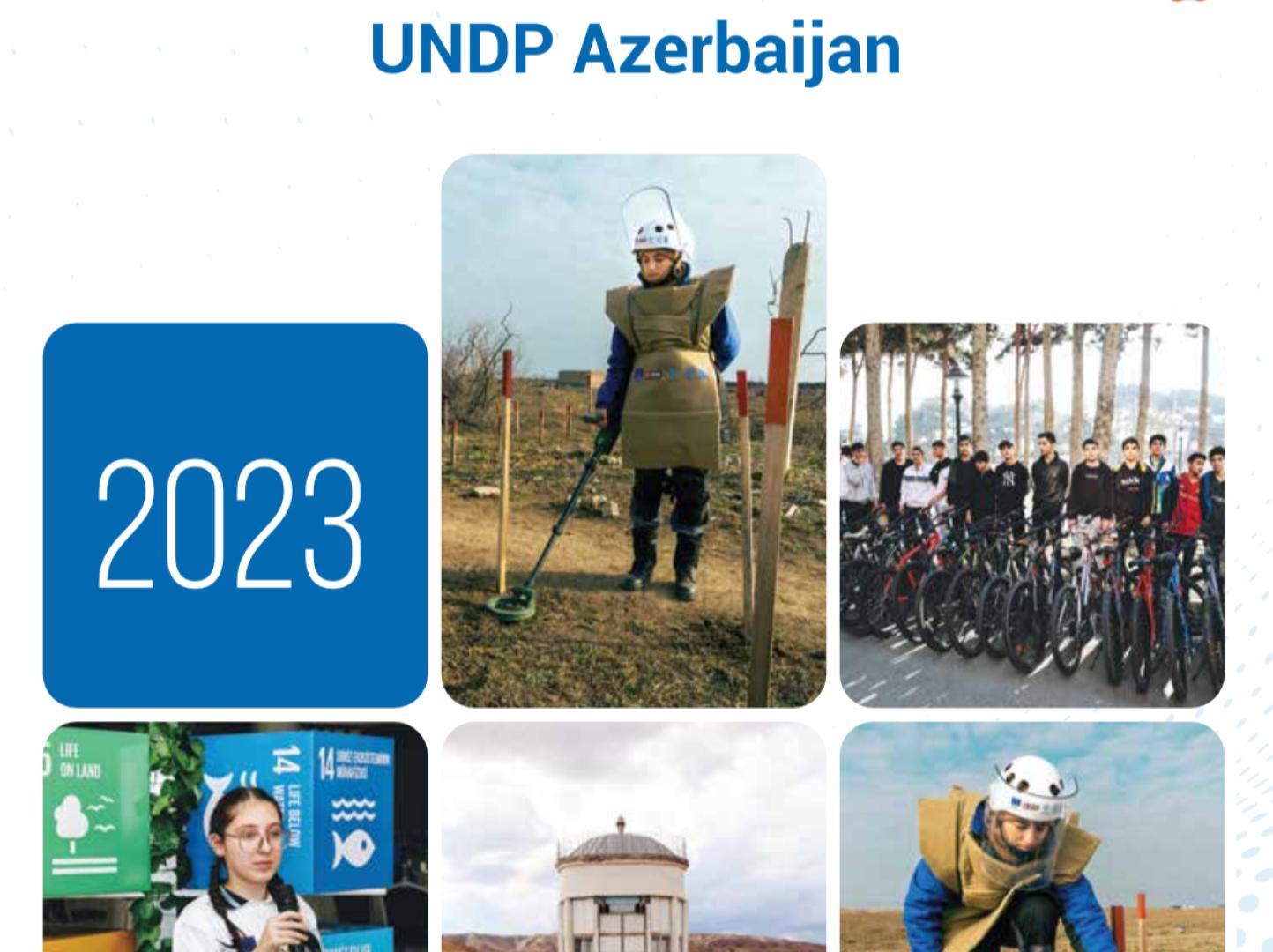
Annual Results Report 2023
The report highlights the last year's results of our joint efforts with the Government, civil society organizations, academia, the private sector, and the achievements in in the implementation of the 2030 Agenda for Sustainable Development.Click here to read the report
1 of 5

Press Release
18 December 2025
Seminar Held on “Promoting Inclusive Language in Media”
A seminar titled “Promoting Inclusive Language in Media” was held, jointly organized by the United Nations in Azerbaijan and the Ministry of Labour and Social Protection of the Population. The event brought together media representatives, NGOs working on disability-related issues, members of the UN Communications Group and the Inclusion Working Group, as well as experts.At the opening of the seminar, Deputy Minister of Labour and Social Protection of the Population Rashad Mustafayev spoke about the work being carried out in Azerbaijan in the areas of social protection, rehabilitation, and social integration of persons with disabilities. It was noted that within the framework of social reforms implemented in recent years upon the instructions of President Ilham Aliyev, significant increases have been made in pensions, allowances, and scholarships for persons with disabilities. The important role of the DOST Inclusive Development and Creativity Center, established on the initiative of First Vice-President Mehriban Aliyeva, in developing the creative potential of persons with disabilities was also highlighted. The Ministry shared information on inclusive projects implemented in recent years for persons with disabilities.It was emphasized that, in line with the UN Convention on the Rights of Persons with Disabilities, one of the directions of improving national legislation based on progressive international practice has been the replacement of a number of stereotypical, outdated, or vulgar terms related to disability with modern and ethically appropriate expressions. For example, terms such as “mute” have been replaced with “a person with fully limited speech ability,” “blind” with “a person with fully limited vision,” and “deaf” with “a person with fully limited hearing,” among others.It was stressed that the media should also avoid using outdated terminology or vulgar expressions when reporting on issues related to persons with disabilities. Instead, journalists are encouraged to use correct, inclusive, and respectful language reflected in legislation, promoting an approach that respects the characteristics and dignity of these individuals.UN Resident Coordinator in Azerbaijan, Ms. Vladanka Andreeva, referred to the UN Disability-Inclusive Communication Guidelines and underlined the importance of inclusive language in the media. She noted that the training aimed to promote dialogue among participants, share good practices, and strengthen capacity for the use of inclusive language in media reporting.As part of the seminar, an interactive performance titled “The Words We Choose” was presented, along with a presentation on “Understanding Disability and Inclusion – Key Concepts and Terminology.” An interactive training session on the use of inclusive language in describing disability was conducted. Group work was also organized, during which participants wrote short news pieces or stories using inclusive language, followed by an evaluation of the final outputs.
1 of 5
Press Release
24 October 2025
Azerbaijan and the United Nations sign a new Cooperation Framework for 2026–2030 as the UN marks its 80th anniversary
Baku, [24 October 2025] - On the occasion of the 80th anniversary of the United Nations, the Government of Azerbaijan and the UN Country Team in Azerbaijan signed the new UN Sustainable Development Cooperation Framework (UNSDCF) for 2026–2030. The new Cooperation Framework was signed by Mikayil Jabbarov, Minister of Economy of the Republic of Azerbaijan, and Vladanka Andreeva, the UN Resident Coordinator in Azerbaijan. The Framework defines the strategic direction of partnership between the Government and the United Nations over the next five years, reflecting shared commitments to advance sustainable development and the well-being of all people in Azerbaijan. Ms. Vladanka Andreeva, United Nations Resident Coordinator in Azerbaijan, highlighted the strong partnership between the Government of Azerbaijan and the United Nations in advancing the Sustainable Development Goals. Ms. Andreeva noted that the signing of the new Sustainable Development Cooperation Framework, coinciding with the UN’s 80th anniversary, marks a new and forward-looking phase of collaboration-grounded in shared commitment to sustainable development for people and planet. In his remarks, Minister of Foreign Affairs Jeyhun Bayramov emphasized the important role of the United Nations as one of the main pillars of multilateral diplomacy and extended his congratulations on the occasion of the Organization’s 80th anniversary. Mr. Bayramov noted that Azerbaijan, in full alignment with the UN’s Global Agenda, attaches particular importance to advancing the Sustainable Development Goals, promoting digital innovations, empowering women and youth, and fostering humanitarian initiatives and intercultural dialogue. In his remarks, Minister of Economy Mikayil Jabbarov highlighted the long-standing and effective cooperation between Azerbaijan and the United Nations. He noted that this partnership has created new opportunities for sustainable development and effective support mechanisms to enhance the country’s economic development model. The Minister emphasized that the new Cooperation Framework, marking a new phase of joint action, builds upon the achievements of previous cooperation periods and aligns with Azerbaijan’s long-term socio-economic priorities, including the development of human capital, promotion of innovation, ecosystems, climate resilience, an efficient green transition, and inclusive growth. The event brought together senior government officials, representatives of the diplomatic corps, and international organizations. Participants reflected on eight decades of the UN’s global work and Azerbaijan’s partnership with the Organization in advancing the 2030 Agenda for Sustainable Development.The ceremony featured a screening of “A Living Legacy”, a short film dedicated to the UN’s 80-year history of promoting peace, dignity, and prosperity for all.The UN Sustainable Development Cooperation Framework (2026–2030) serves as the central planning instrument for the UN development system’s activities in Azerbaijan, guiding joint efforts to accelerate progress towards the Sustainable Development Goals through coordinated, transparent, and accountable action.
1 of 5
Press Release
31 January 2025
Strategic priorities for the future cooperation between Azerbaijan and the UN discussed
With participation of over 150 representatives from the Government, UN Country Team, civil society, youth, academia, private sector, development partners and others, the participants had an interactive dialogue on the areas where the UN is best placed to contribute, in support of Azerbaijan’s national development priorities and accelerated progress towards the Sustainable Development Goals (SDGs).The workshop opened with remarks from H.E. Mr. Samad Bashirli, Deputy Minister of Economy of the Republic of Azerbaijan, H.E. Mr. Yalchin Rafiyev, Deputy Minister of Foreign Affairs of the Republic of Azerbaijan and Vladanka Andreeva, UN Resident Coordinator in Azerbaijan.Emphasizing Azerbaijan’s strong commitment to the SDGs, Mr. Bashirli stated that the country maintains close cooperation with the UN and actively supports global initiatives, with Azerbaijan’s hosting of COP29 bringing the relationship to a new level.Noting the country’s readiness to cooperate for the successful implementation of the new Cooperation Framework, Mr. Rafiyev emphasized the importance of advancing the National SDG 18 on Mine Action for Azerbaijan’s sustainable development.Appreciating the close collaboration and strong partnership with the Government and different stakeholders under the current Cooperation Framework (2021-2025) and in the context of COP29, Andreeva said: “The UN Country Team is here to support the Government and its people in Azerbaijan’s journey towards sustainable development. The strategic priority areas that we will discuss today are not separate priorities for the UN but the UN’s contribution for Azerbaijan to achieve the SDGs, including National SDG 18 on Mine Action.” The full-day workshop concluded with a broad consensus on the strategic priority areas of cooperation, in support of Azerbaijan’s national development priorities and progress towards the SDGs through the collective promise to leave no one behind.
1 of 5
Press Release
18 December 2024
A tree planting event was held to mark International Migrants Day
Further the contributions made by migrants to build climate resilience in both their host and home communities. A total of 100 volunteers, including migrants and representatives attended the event led by the Head of the State Migration Service Vusal Huseynov, Minister of Ecology and Natural Resources Mukhtar Babayev, and the Chief of IOM Azerbaijan Troy Dooley.
1 of 5
Press Release
16 December 2024
IOM Azerbaijan Supports the Sustainable Reintegration of Voluntary Returnees
During January-October 2024, IOM Azerbaijan facilitated reintegration of 295 individuals returning from various European countries and supported them in establishing small businesses, and addressing temporary housing, education or medical needs. Since 2018, IOM has facilitated the safe and dignified return of over 5,400 individuals to Azerbaijan and provided reintegration support to more than 3,400 returnees, mainly from Belgium, Germany, the Netherlands, Norway, Finland and Switzerland through AVRR. These initiatives align with IOM’s global efforts to promote safe, orderly, and dignified migration while ensuring the human rights of migrants are upheld. Since 1979, IOM has supported the return and reintegration of over 1.6 million people worldwide in collaboration with governments, international organizations, and non-governmental stakeholders.IOM’s reintegration assistance directly contributes to the implementation of the 2030 Agenda for Sustainable Development, particularly target 10.7, which focuses on facilitating safe and responsible migration. It also supports other related targets, including 10.2, 17.9, and 17.17.The AVRR programme also align with the objectives of the Global Compact for Safe, Orderly and Regular Migration, particularly Objective 21, which emphasizes cooperation in facilitating safe and dignified return and sustainable reintegration. Other objectives, including 1 (data collection), 3 (provision of information), 4 (legal pathways), 7 (reducing vulnerabilities), 12 (screening and referral), and 13 (migration in disaster contexts), are also supported through IOM’s broader commitment to enhancing migration governance.IOM remains a committed partner to the government of Azerbaijan in achieving these goals.
1 of 5
Latest Resources
1 / 11




Resources
19 December 2023
1 / 11
