Promoting Inclusive Language in Media
Opening Remarks UN Resident Coordinator in Azerbaijan
Dear Deputy Minister,
Distinguished media representatives,
Distinguished colleagues from Organizations of Persons with Disabilities,
Colleagues and partners,
Good morning, and welcome.
Thank you for joining us today for this important workshop on promoting inclusive language in the media, jointly organized by the United Nations in Azerbaijan and the Ministry of Labour and Social Protection of Population.
Language matters.
The words we choose shape perceptions, influence attitudes, and ultimately affect how people are seen, treated, and included in society. For persons with disabilities, language can either reinforce stereotypes and exclusion—or promote dignity, equality, and agency.
When launching the United Nations Disability Inclusion Strategy in 2019, the Secretary-General was clear: the United Nations must lead by example. We must raise our standards and performance on disability inclusion—across all pillars of our work, from headquarters to the field.
This commitment is particularly relevant as we mark the International Day of Persons with Disabilities 2025, under the theme “Fostering disability inclusive societies for advancing social progress.” This theme reflects a renewed global consensus—reaffirmed at the Second World Summit for Social Development—that social progress is only possible when all segments of society are fully included.
In 2025, the Secretary-General presented his sixth system-wide report on disability inclusion, reflecting on six years of implementation of the Strategy. The report highlights progress achieved between 2019 and 2024, while also setting a higher bar for the future, calling for accelerated, transformative, and system-wide action on disability inclusion.
In Azerbaijan, important progress has been made, guided by the Convention on the Rights of Persons with Disabilities and the 2030 Agenda Sustainable Development, particularly SDG 10 on reduced inequalities and SDG 16 on inclusive institutions. At the same time, challenges remain—especially in how disability-related issues are portrayed in the media, where outdated or stereotypical language can still appear, often unintentionally.
Dear colleagues,
The media plays a powerful role in shaping public discourse.
Journalists are not only storytellers, but also key partners in social change. Through responsible and inclusive reporting, the media can help dismantle stigma and ensure that persons with disabilities are represented as rights-holders and active contributors to society.
Today’s workshop is designed to be practical and interactive—bringing together media professionals, persons with disabilities, disability experts, and UN and government to exchange perspectives and work with concrete examples.
I thank the Ministry of Labour and Social Protection of Population for its leadership, and Organizations of Persons with Disabilities and media representatives for their partnership and openness in this dialogue.
I encourage you to use today as a space for learning, reflection, and exchange. By choosing our words carefully, we can contribute to a media landscape that truly reflects dignity, equality, and inclusion for all.
Thank you, and I wish you a productive workshop.



Speech by
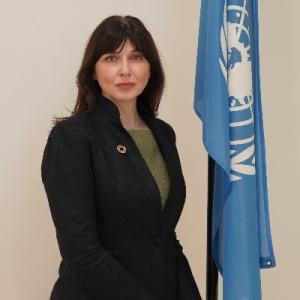
Vladanka Andreeva
Goals we are supporting through this initiative